

Methallylescaline hydrochloride
Price range: $40.00 through $600.00
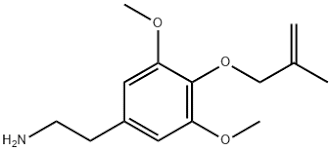
Synonym: 3,5-dimethoxy-4-methallyloxyphenethylamine hydrochloride
CAS Number: 207740-41-8
Formula: 2-{3,5-dimethoxy-4-[(2-methylprop-2-en-1-yl)oxy]phenyl }ethan-1-amine hydrochloride
Molar mass: 287.8 g/mol
Purity: >97%
| Quantity |
0.25 grams ,0.50 grams ,1 gram ,5 grams |
|---|
What is Methallylescaline HCl?
Methallylescaline hydrochloride, also known by its full scientific name 3,5-dimethoxy-4-propallyloxyphenethylamine hydrochloride, is a research chemical belonging to the phenethylamine class. It is a modified derivative of a naturally occurring psychedelic compound found in certain cacti.
The compound is obtained by adding an allyl group to the 4-position of the phenethylamine backbone of a naturally occurring compound, resulting in methallylescaline. The addition of the hydrochloride salt to the compound improves its stability and solubility, allowing controlled experiments and analyses.
Scientists are interested in studying Methallylescaline hydrochloride to better understand its chemical structure, receptor interactions, and possible effects on the human mind and body. Through controlled laboratory experiments, researchers aim to investigate its pharmacological properties, including its influence on neurotransmitter systems and receptor subtypes. Ongoing research into Methallylescaline hydrochloride is aimed at expanding our knowledge of its properties, effects and potential applications. It is important to conduct further research to fully understand this RCK, including its safety profile, potential therapeutic benefits, and any associated risks.
Methallylescaline hydrochloride is a research chemical belonging to the phenethylamine class of compounds. It is a synthetic substance that acts as a psychedelic and hallucinogenic compound.
Usage and Effects:
Methallylescaline hydrochloride is reported to produce hallucinogenic effects, including visual and auditory distortions, altered perception of time and space, and changes in thought patterns and emotions. The specific effects and intensity may vary depending on the individual and dosage. It is important to start with a low dose and gradually increase if necessary, under the guidance of a knowledgeable and experienced individual.
Precautions and Warnings:
– Methallylescaline hydrochloride is a potent psychedelic substance and should only be used by individuals who are well-informed about its effects and risks.
– It is important to have a safe and comfortable environment, with a trusted individual present, when using Methallylescaline hydrochloride.
– Methallylescaline hydrochloride should not be used by individuals with a history of mental health disorders or those who are pregnant or breastfeeding.
– It is crucial to research and understand the legal status of Methallylescaline hydrochloride in your country or region before purchasing or using it.
How was Methallylescaline HCl created?
The history of Methallylescaline hydrochloride dates back to the mid-20th century, when researchers began investigating the chemical modification of a naturally occurring compound to understand its structure-activity relationship and potential effects. By adding an allyl group to the 4-position of the phenethylamine backbone, scientists created Methallylescaline, which exhibited unique properties and characteristics.
The addition of the hydrochloride salt to Methallylescaline improved its stability and solubility, making it suitable for controlled laboratory experiments. This allowed researchers to study its pharmacological properties, receptor interactions and possible effects on the central nervous system. The synthesis and study of Methallylescaline hydrochloride have contributed to the broader field of psychedelic and hallucinogenic research. Scientists are trying to understand its chemical structure and how it interacts with specific receptors in the brain, shedding light on the underlying mechanisms of action.
Ongoing research into methallylescaline hydrochloride continues to expand our knowledge of its properties, effects and potential applications. Researchers explore the potential therapeutic benefits, the role in understanding the neurobiology of psychedelics, and the potential contribution to the development of new treatment methods in various areas.
Ordering Information:
Only Pure Research Chemicals is committed to providing high-quality research chemicals and excellent customer service. To place an order for Methallylescaline hydrochloride or inquire about pricing and availability, please visit our website or contact our customer support team. We prioritize customer satisfaction and ensure discreet packaging and prompt worldwide delivery.
Unlock the potential of Methallylescaline hydrochloride in your research endeavors. Join the community of researchers at the forefront of scientific advancements by ordering Methallylescaline hydrochloride from Only Pure Research Chemicals today.
Only Pure Research Chemicals – Connecting you with the research chemicals you need for cutting-edge scientific research.

Related products


MPT fumarate (N-methyl-N-propyltryptamine)
Synonym: N-methyl-N-propyltryptamine fumarate
CAS Number: N/A
Formula: 3-[2-(propyl(methyl)amino)ethyl]-1H-indole fumarate
Mole mass: 332.4 g/mol
Purity: >97%
- Molecular Formula: C20H24N2O5
- Molecular Weight: 376.42 g/mol
- IUPAC Name: (2-(5-methoxy-1H-indol-3-yl)-1-(prop-2-en-1-yl)propyl) benzyl carbamate ethanedioate
- Appearance: NB-5-MeO-DALT Oxalate is commonly found as a white or off-white powder.